

Shift Work After 50: Practical Ways to Protect Sleep, Energy, and Safety
A person who starts work at 6 a.m. one week and finishes at 6 a.m. the next does not live on a neat wellness calendar. There are handoffs, production demands, overtime, a commute, meals at unusual hours, and a household that may still run on a daytime schedule. Advice to “just go to bed at the same time every night” misses much of that reality.
Plant work also asks different things of the body than desk work. Depending on the job, a shift may involve standing, lifting, repetitive tasks, heat, protective equipment, or close attention around moving equipment. Fatigue can matter for comfort and for safety. After 50, the right approach is still individual: age alone does not determine capacity, and the same plan will not fit every worker or rotation.
The useful question is: What can you protect when your clock time keeps changing? Start with sleep opportunity, then build a few dependable routines around each shift.
1. Plan a sleep opportunity before filling the calendar
The first hours after a night shift can disappear into errands and chores. If daytime sleep is difficult, that delay may make a short sleep period even shorter. The CDC/NIOSH guidance on night-shift sleep recommends giving sleep priority when workers arrive home. It was developed for nurses, but the basic issue—trying to sleep while the world is awake—also applies to many plant workers.
Before a new rotation begins, write down the hours when sleep is realistically possible, including the commute, meals, caregiving, and the next shift. Tell household members which part of that time needs protection. If one long block is not possible, discuss a workable plan with a healthcare professional or sleep specialist rather than treating chronic short sleep as normal.
This is not a command to sleep on a rigid timetable. It is a way to make rest an appointment instead of whatever remains after everything else.
2. Make daytime sleep easier to defend
Daytime brings light, deliveries, traffic, family activity, and phone alerts. A sleep space that is dark, quiet, cool, and comfortable can help. NIOSH suggests room-darkening coverings, reducing intrusive noise, and managing light from electronic devices in its sleep-environment guidance.
Try the smallest changes that match your home: an eye mask, earplugs when safe and comfortable, blackout curtains, a fan or white noise, and a phone setting that allows urgent contacts through while muting routine notifications. Ask family members not to schedule nonurgent tasks during your protected sleep block. If you share a bedroom, a different room may occasionally work better than a debate about someone else’s daytime routine.
Keep a safe path to the bathroom if the room is dark. Better sleep conditions should not create a fall hazard.
3. Use a wind-down routine that travels between shifts
Clock time changes, but a sequence can remain familiar. After work, a simple pattern might be: prepare tomorrow’s essentials, have a light meal if hungry, wash up, lower the lights, and head to bed. On day shifts, the same sequence can begin in the evening. On nights, it can begin after the commute.
NIOSH advises limiting caffeine several hours before intended sleep and notes that individual sensitivity varies. It also cautions that alcohol can disrupt sleep and that a heavy meal close to bedtime may be uncomfortable. See its preparing-for-sleep guidance. You do not need a universal caffeine cutoff; pay attention to how your own timing affects the sleep you are trying to protect.
If frequent schedule changes, persistent insomnia, loud snoring, breathing pauses, or severe daytime sleepiness keep interfering, seek medical guidance. A routine cannot diagnose or treat a sleep disorder.
4. Pack for the shift you actually work
A 12-hour night shift rarely follows a traditional breakfast-lunch-dinner pattern. Food planning can still be simple. Bring a meal you can eat during the break available to you, a shelf-stable backup if refrigeration is uncertain, and a drink you can access according to workplace rules.
Think in flexible combinations rather than a perfect shift-worker diet: a bean-and-rice bowl with vegetables, a sandwich and fruit, yogurt and oats kept safely chilled, or leftovers packed at the right temperature. A physically demanding role may require different portions from a less active one. Heat, medication, diabetes management, and workplace hydration rules may also change what is appropriate.
Our guide to everyday meals for strength and energy after 50 offers more ways to build meals from familiar foods. If food or fluid timing is medically important for you, follow individualized advice.
5. Treat breaks as a safety resource
When a line is behind, it can feel easier to postpone a break. Yet fatigue can affect attention, reaction, and error risk. NIOSH describes work-related fatigue as a worker-health and safety concern, not simply a matter of motivation.
Use permitted rest and meal breaks to actually recover. Sit when possible after prolonged standing, eat if hungry, and use the restroom and water access available to you. A brief change of position may feel good, but do not stretch near machinery, remove required protective equipment, or interrupt a safety-critical task to follow a wellness tip.
If breaks are routinely missed, the schedule repeatedly leaves inadequate recovery, or fatigue makes a task feel unsafe, raise that with a supervisor, safety representative, or occupational-health resource. Individual habits cannot substitute for safer staffing and work design.
6. Separate work activity from exercise goals
Walking a plant floor and lifting at work can be demanding. That effort deserves respect. It may also be repetitive and job-specific, so it does not automatically meet every movement goal. At the same time, adding a hard workout after an exhausting shift may be the wrong choice for recovery.
Start with how you feel and what your role already requires. A day off might be a good time for enjoyable walking, a modest strength session, or another activity that complements your work. On a demanding workday, gentle movement or rest may be more appropriate. Our beginner exercise guide after 50 explains aerobic activity, strength, mobility, and balance without prescribing one schedule.
Persistent pain, numbness, weakness, dizziness, or unusual breathlessness calls for appropriate assessment. Do not try to solve a workplace injury by exercising through it.
7. Make the drive home part of the plan
The end of a night or extended shift is not the end of the safety problem. If you are struggling to stay awake, do not drive. NIOSH recommends arranging another ride, using transit or a taxi where available, or finding a safe place to rest when drowsiness makes the trip unsafe. Its night-shift guidance discusses this specifically.
Decide in advance who you could call, where you could wait safely, and whether a coworker or family member could help. Caffeine is not a reliable substitute for enough sleep, and an open window cannot make a dangerously sleepy drive safe.
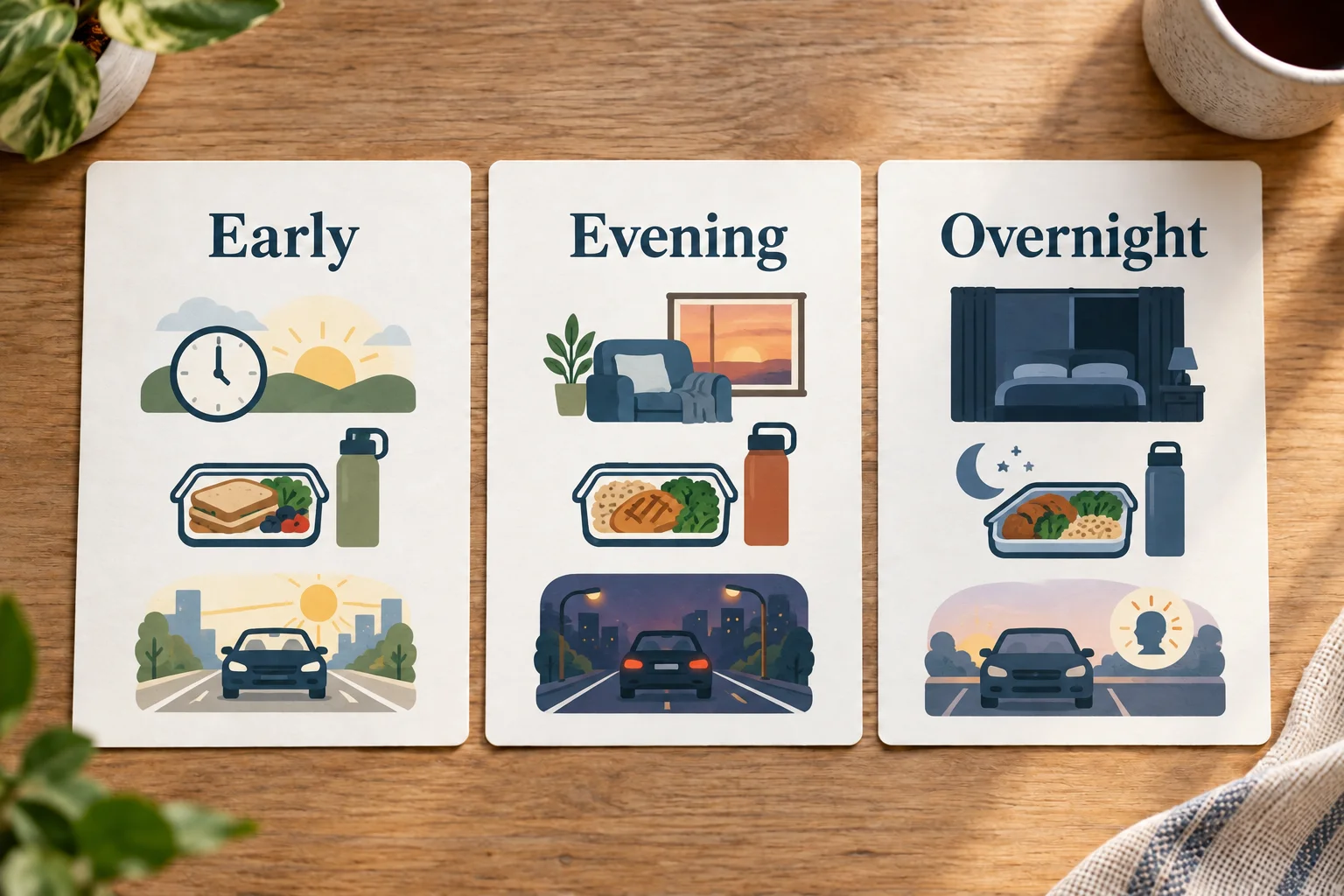
A rotation plan you can actually use
Instead of writing one ideal daily timetable, make a short plan for each kind of shift:
| Shift | Sleep to protect | Food to prepare | One safety check |
|---|---|---|---|
| Early start | Bedtime opportunity before the alarm | Pack breakfast or an early break meal | Check alertness before the commute |
| Evening shift | Sleep block after getting home | Bring a meal for the middle of the shift | Preserve a real break when permitted |
| Overnight shift | Dark, quiet daytime sleep opportunity | Pack a meal and a backup | Arrange a safe trip home if drowsy |
These are prompts, not a medical prescription. If your rotation changes with little notice, keep one dependable action per shift: protect a sleep block, pack a usable meal, and check whether you are alert enough for safety-critical work and driving.
Shift work after 50 does not require a perfect routine. It requires practical support for the hours you actually live. Choose one friction point this week—sleep interruptions, missed food, a break you never take, or a hazardous commute—and make a specific plan for it. Review what helped after the next rotation, then adjust.
This article is general education. It does not replace medical advice, an occupational-health evaluation, your employer’s safety rules, or individualized guidance for a health condition or medication.
Discover more from Your Whole Body Transformation
Subscribe to get the latest posts sent to your email.