

How to Build Everyday Meals for Strength and Energy After 50
Food can support the things you want to keep doing: carrying groceries, tending a garden, taking a walk, working, caring for someone, learning a new activity, or recovering from the movement already in your week. That’s the purpose of meals for strength and energy after 50—not changing your appearance or following a perfect diet.
If you also want to explore movement, the beginner guide to strength, aerobic activity, mobility, and balance presents adaptable choices rather than a one-size-fits-all workout.
A meal doesn’t have to be cooked from scratch, beautifully plated, or different every day to be worthwhile. Familiar foods, leftovers, frozen vegetables, canned beans, prepared items, and repeated breakfasts all count. The useful question is not “Is this meal ideal?” It’s “What combination is workable and nourishing for me today?”
No single meal can create strength, guarantee steady energy, or explain why you feel tired. Strength also depends on using your muscles, and day-to-day energy can be affected by sleep, health conditions, medications, stress, access to food, and many other factors. Meals are one supportive part of the picture.
If you’re deciding whether meals are the most useful place to begin, the whole-body starting guide offers a one-need, one-action, one-review-point framework.
Use a flexible meal-building pattern
When you want some structure, try looking for four roles in the meal:
- A protein-containing food
- A fruit, vegetable, or both, in a form that works for you
- A grain, starchy vegetable, or another carbohydrate food that suits the meal
- Flavor and finishing touches, plus a drink that suits you
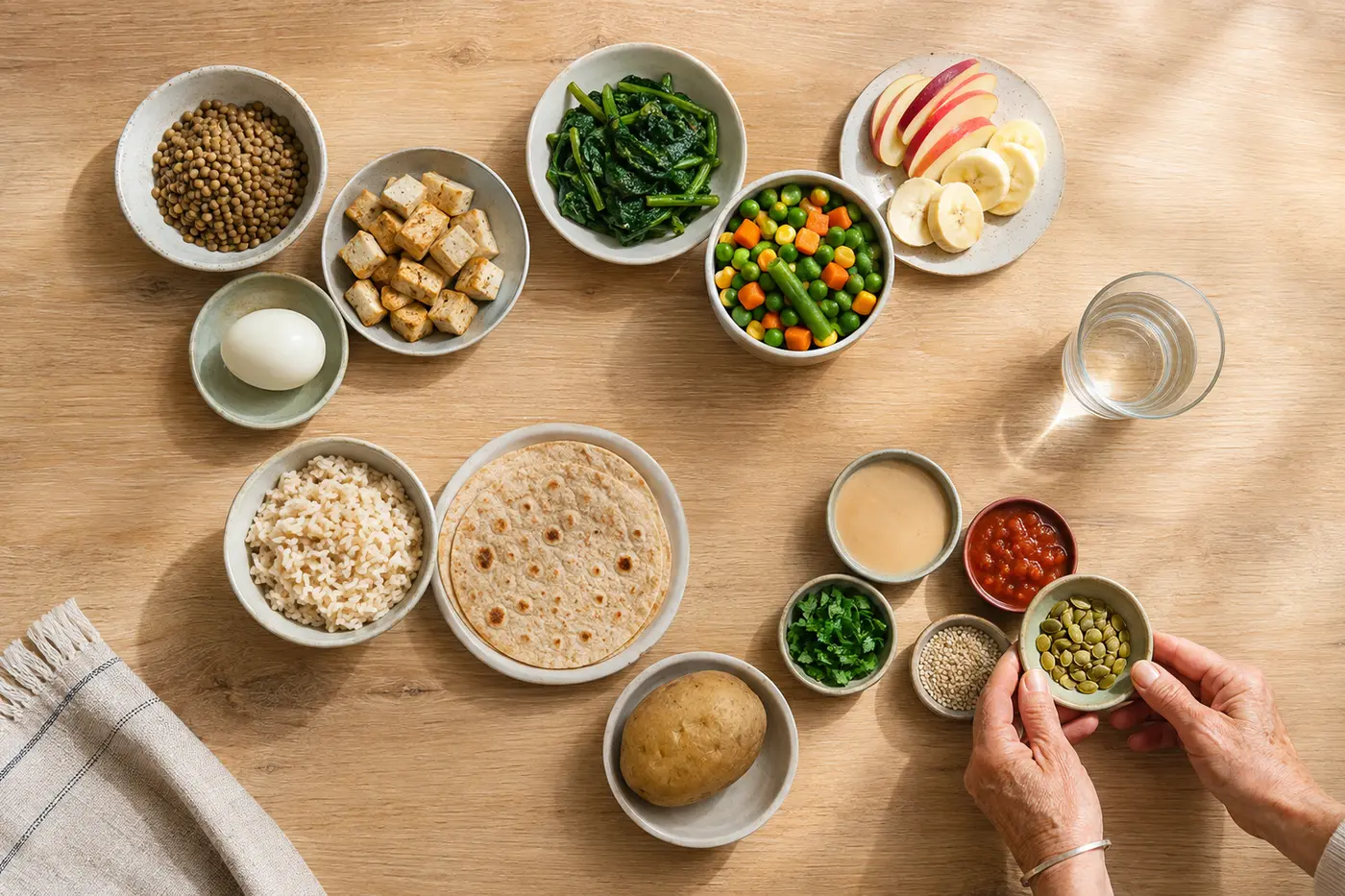
This is an editorial assembly tool, not a portion rule. The roles can overlap. Bean soup may provide protein, carbohydrate, vegetables, and flavor in one bowl. Yogurt with fruit, oats, and nuts may cover the whole pattern without looking like a conventional dinner plate. Some meals will include every role; others won’t. What matters more is the broader pattern and whether it works with your needs.
MedlinePlus guidance on nutrition for older adults describes protein, carbohydrates, fats, vitamins, minerals, and water as nutrients the body needs, and it encourages variety across food groups. The page is broad consumer education, not a personal menu or a reason to calculate every bite.
Start with a protein-containing food
Protein helps your body function and maintain tissues. Protein-containing foods can come from plants, animals, or both: beans, lentils, peas, soy foods, nuts and seeds, eggs, fish, poultry, meat, milk, yogurt, cheese, and fortified alternatives are possibilities. Your culture, preferences, budget, allergies, chewing or swallowing needs, and medical care may narrow or expand that list.
“Include a source” is more responsible than “eat as much as possible.” More is not automatically better, and this article does not set a universal protein amount. If one option is already present—lentils in a curry, fish in a stew, tofu in a noodle bowl, eggs in a breakfast taco—you don’t need to force the meal into a different cuisine to make it count.
Add produce in a workable form
Fresh produce is one option, not the admission price for a nourishing meal. Frozen fruit and vegetables can reduce prep and spoilage. Canned tomatoes, pumpkin, peaches, green beans, or mixed vegetables can be useful pantry foods. No-salt-added or lower-sodium versions may help some people follow individual advice, but they aren’t a universal requirement.
Texture matters. Soft-cooked vegetables, fruit packed in juice, applesauce, soups, smoothies, or chopped and grated produce may be easier for some people. If chewing or swallowing has become difficult, don’t rely on improvised texture changes alone; a healthcare professional can help identify an appropriate, safer approach.
Choose a carbohydrate food that belongs in the meal
Rice, tortillas, bread, pasta, oats, corn, plantains, potatoes, sweet potatoes, noodles, couscous, barley, and other grains or starchy vegetables can make a meal familiar and useful. Carbohydrate foods are not a moral failure. They are part of many nourishing cultural foodways, offering energy and a range of nutrients.
The choice does not have to pass a purity test. You might choose what you enjoy, what you can afford, what you digest comfortably, or what fits guidance you’ve received for a health condition.
Include flavor, fats, and a suitable drink
Flavor is part of making food worth eating. Herbs, spices, sauces, aromatics, oils, avocado, nuts, seeds, cheese, coconut, pickles, or a familiar condiment can help a meal feel complete. They also carry different amounts of sodium, sugar, fat, or allergens, which may matter to some readers but not in the same way for everyone.
Keep a drink available when that is appropriate for you. Water, milk, fortified plant beverages, tea, coffee, soups, and water-rich foods can all contribute fluid. Hydration needs vary, and some heart, kidney, liver, or other conditions require individualized fluid guidance. This article does not prescribe an amount.
See how the pattern works in ordinary meals
The following are editorial examples, not prescribed menus. Adapt ingredients, textures, and combinations to your foodways and needs.
- Bean-and-rice bowl: Black beans or pinto beans, rice, salsa or cooked peppers, avocado or cheese, and a drink.
- Mediterranean-style plate: Hummus, pita or another flatbread, tomato and cucumber or cooked vegetables, olives or olive oil, and fruit.
- Quick noodle bowl: Noodles with tofu, egg, chicken, or edamame; frozen vegetables; broth or sauce; and a suitable drink.
- Soup-and-toast meal: Lentil, chicken, fish, or bean soup with bread or toast and fresh, frozen, or canned fruit.
- Breakfast at any hour: Eggs or tofu scramble with tortillas and vegetables; or yogurt or a fortified soy alternative with oats, fruit, and nuts or seeds.
- Prepared-food combination: Rotisserie chicken, baked tofu, or another prepared protein-containing food with microwave rice and a bagged salad or frozen vegetables.
- No-cook plate: Canned fish or beans, crackers or bread, cut vegetables or canned fruit, and yogurt, cheese, or an alternative that fits.
- Comforting one-pot meal: Chili, dal, peanut stew, congee with egg or tofu, or a familiar family stew, with ingredients adjusted to your preferences.
A repeated meal can be a strength, not a lack of imagination. If oatmeal with milk or soy beverage, fruit, and peanut butter makes mornings easier, repetition reduces decisions. You can keep the base and change one ingredient when you want variety.
Make convenience and cost part of the design
The best framework still has to survive a busy Tuesday. It can help to keep a few foods from each role in forms you can actually use:
- Shelf-stable: Beans, lentils, canned fish or chicken, nut or seed butter, oats, rice, pasta, tortillas, canned fruit, canned vegetables, and shelf-stable milk or fortified alternatives
- Frozen: Vegetables, fruit, cooked grains, fish, poultry, plant-based protein foods, and complete meals that can be paired with another item if useful
- Refrigerated or prepared: Eggs, yogurt, cheese, tofu, precooked grains, bagged greens, cut vegetables, dips, soups, and prepared entrées
Store brands, bulk purchases, and larger packages can save money only when the food will be used and storage is available. Smaller containers, single servings, precut items, or delivery may be the more practical choice when dexterity, fatigue, transportation, food waste, or living alone matters. “Budget-friendly” is personal; time, physical effort, equipment, and spoilage are costs too.
With only a microwave, you can combine a microwavable grain, beans or another ready-to-eat protein food, and frozen vegetables. With a kettle, instant oats or couscous can become a base for fruit and nut butter or for chickpeas and vegetables. With no cooking equipment, bread or crackers, beans, canned fish, nut butter, or another protein-containing food that doesn’t require cooking, produce, and a drink can still make a meal. Follow package storage and heating directions, and use shelf-stable foods when refrigeration isn’t reliable.
Use food labels when they answer a real question
A label can help you compare two products or check something that matters for an allergy or health condition. It does not decide whether a food belongs in your life.
The FDA’s guide to the Nutrition Facts label explains that nutrient amounts correspond to the listed serving size and that serving size reflects an amount people typically consume—not a recommendation of how much you should eat. Percent Daily Value can provide general context and help compare products. The label’s reference calorie level is general labeling context, not a personal calorie target.
If you have a food allergy, read the ingredient and allergen information every time rather than assuming a familiar product is unchanged. The FDA explains current U.S. labeling requirements for the nine major food allergens. People can also be allergic to foods outside that group, so follow the safety plan provided by your healthcare team.
Individual needs can change the pattern
- Kidney disease: Protein, sodium, potassium, phosphorus, and fluid advice may change with kidney function and treatment. NIDDK guidance for adults with chronic kidney disease recommends working with a registered dietitian to develop and adjust an eating plan. Generic “high-protein” or hydration advice isn’t appropriate here.
- Diabetes and other metabolic conditions: Food choices and timing may interact with blood glucose goals and medicines. NIDDK guidance on healthy living with diabetes notes that meal timing may depend on medicines and that delaying or skipping a meal can matter with insulin or certain diabetes medicines. Follow your individualized plan rather than treating these examples as medical guidance.
- Medicines: Food, alcohol, and supplements can interact with medicines; ask a pharmacist or prescribing clinician about your combination, and don’t change medicine because of nutrition content.
- Pregnancy: Pregnancy changes some food-safety and nutrient considerations, so follow your prenatal clinician’s or registered dietitian’s guidance.
- Appetite, chewing, or swallowing changes: Persistent appetite loss, trouble chewing, coughing or choking with food or drinks, or difficulty swallowing deserves professional attention and individual guidance on texture and nourishment.
- Eating-disorder history: If this framework is unhelpful or triggering, skip it and consider an eating-disorder-informed clinician or dietitian.
Allergies, digestive conditions, dental issues, disability, cultural or religious practices, and access to safe food also deserves accommodation. Use what fits your body and life.
Notice patterns without trying to diagnose low energy
You might notice whether your schedule creates long gaps without food, food is available after activity, meals are manageable, or appetite, taste, or swallowing has changed.
Sleep and activity load are other parts of the context, and the sleep and recovery guide explains how to consider them without treating one sign or score as a diagnosis.
These observations may help you ask better questions, but they can’t explain a change in energy. Seek timely medical guidance for new, severe, persistent, or worsening fatigue; unintended weight change; ongoing appetite loss; dehydration concerns; repeated dizziness; difficulty eating or drinking; or other concerning symptoms. If you’re choking or have another urgent symptom, seek urgent help.
Choose one meal to make easier
You don’t have to rebuild your entire week. Choose one meal that regularly creates friction and make one supportive change:
- Add beans, eggs, yogurt, tofu, fish, poultry, meat, nuts, or seeds to a meal that lacks a protein-containing food.
- Keep one frozen or canned fruit or vegetable you genuinely use.
- Pair a ready-to-eat protein food with bread, rice, noodles, tortillas, or potatoes already in your routine.
- Create one no-cook or microwave backup meal.
- Repeat a reliable meal and vary it only when that helps.
Then notice whether the change was affordable, enjoyable, physically manageable, and easy enough to repeat. Keep it, adapt it, or choose something else. That is not failure; it is useful information about how food can support the life you’re living.
Discover more from Your Whole Body Transformation
Subscribe to get the latest posts sent to your email.