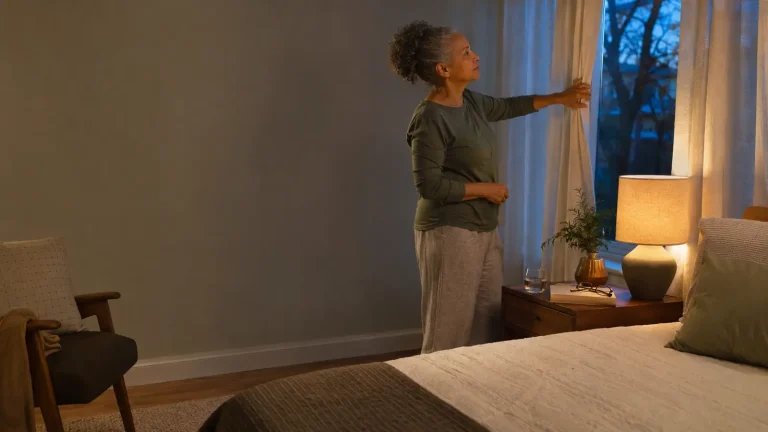

Evening Routine After 50: Simple Ways to Wind Down
A helpful evening routine doesn’t need to be long, expensive, or perfectly consistent. Its purpose is simply to create a bridge between the demands of the day and a quieter night. That bridge might take an hour on some evenings and 15 minutes on others.
If you’ve already read Sleep and Recovery After 50, consider this the practical next step: a menu of small actions you can arrange around your schedule, responsibilities, mobility, and home environment. You don’t need to adopt every idea. A short routine you’ll repeat is more useful than an elaborate plan you’ll avoid.

Start with an anchor, not a rigid schedule
An anchor is something that already happens most evenings: washing the dinner dishes, taking an evening medication as directed, locking the door, feeding a pet, or changing into comfortable clothes. Attach the first step of your routine to that existing event.
For example: “After I put my dinner plate away, I’ll lower the living-room lights,” or “After I feed the cat, I’ll put my phone on its charger.” This is a practical form of habit stacking. If you’d like more examples, see 12 Habit-Stacking Ideas for Healthy Aging That Fit Real Life.
Choose an anchor you can control. “When everyone else settles down” may be unpredictable, while “after I brush my teeth” is clearer.
A flexible evening timeline
The following sequence is a template, not a set of rules. Move the pieces to fit caregiving, social plans, work, pain or mobility limitations, and your natural sleep schedule.
Two to three hours before bed: close the kitchen gently
When possible, finish large meals a few hours before bedtime. The National Institute on Aging’s guidance on sleep and older adults recommends avoiding large meals close to bedtime. This doesn’t mean going to bed hungry. If you need an evening snack, choose a familiar, modest option rather than turning it into another full meal.
Late caffeine can also interfere with winding down. Remember that caffeine may be present in coffee, some teas, cola, energy drinks, and chocolate. Instead of imposing an all-or-nothing ban, notice your timing. You might switch an evening coffee to a caffeine-free drink or move chocolate to earlier in the day.
Alcohol may feel relaxing at first but can disrupt sleep later. A practical step is to avoid using it as a sleep aid and choose a nonalcoholic evening drink you already enjoy. If nighttime bathroom trips are an issue, consider having most of your fluids earlier while still drinking according to your needs and any clinician guidance.
About one hour before bed: lower the stimulation
This is the point to make your environment feel different from the daytime. You might dim one or two lamps, stop household projects, and postpone nonurgent work or upsetting news until tomorrow. The National Institute on Aging’s healthy sleep habits include following a regular bedtime routine and taking time to relax before bed.
Screen use doesn’t have to be treated as a moral failure. If screens are part of how you connect with family, manage health tasks, or relax, create a realistic boundary instead. Try one of these options:
- Set a “last check” time for email and news.
- Charge your phone across the room if it’s safe and practical to do so.
- Turn off nonessential notifications while keeping important calls available.
- Replace the final 10 minutes of scrolling with an audiobook, printed book, music, or another quiet activity.
- If you must use a device, choose calm, familiar content rather than work, arguments, or breaking news.
The final 15 to 30 minutes: repeat a simple sequence
A repeatable sequence reduces the number of decisions you need to make when you’re tired. Keep it short enough to use on an ordinary evening.
- Prepare tomorrow lightly. Put out clothes, write down one priority, or place essential items by the door. Stop after a few minutes; this isn’t the time to reorganize the house.
- Complete basic personal care. Brush your teeth, wash your face, and take prescribed medicines according to their instructions.
- Choose one calming activity. Read a few pages, listen to quiet music, take a warm bath or shower, or practice slow, comfortable breathing.
- Go to bed when you feel sleepy. If you aren’t sleepy yet, continue a quiet activity in low light rather than forcing the issue.
If standing is tiring or balance is a concern, sit for personal care, keep needed objects within easy reach, and use a stable chair. Your routine should support your abilities, not test them.
Try a brief “day is done” practice
A busy mind may keep reviewing unfinished tasks after your body has stopped working. A two-minute closing practice can give those thoughts somewhere to go.
Keep paper near your usual evening chair and write:
- one thing that can wait until tomorrow;
- one practical task to remember; and
- one moment from the day you appreciated or simply noticed.
This isn’t a demand to feel positive. It’s a way to record what matters so you don’t have to keep rehearsing it. If writing is uncomfortable, make a short voice note and then put the device aside.
Make the bedroom easier to settle into
A sleep-friendly room is generally quiet, dark, and comfortably cool, according to guidance from the Centers for Disease Control and Prevention. Work with the room and budget you have.
- For light: close curtains, cover bright device indicators, or use an eye mask if it feels comfortable.
- For noise: close a door, use earplugs if you can hear necessary alerts safely, or try a fan or steady background sound.
- For comfort: adjust bedding in layers so it’s easy to add or remove warmth.
- For nighttime safety: clear the route to the bathroom, secure loose rugs, keep glasses or mobility aids within reach, and use enough low-level light to move safely.
You don’t need a renovated bedroom or specialized products. Start by removing one obstacle, such as clutter beside the bed or a bright clock facing you.
If you’re awake and getting frustrated
Watching the clock and trying harder to sleep can make the night feel more stressful. The NHS guidance on insomnia advises getting up and doing something relaxing if you can’t sleep, then returning to bed when you feel sleepier.
Choose a safe, quiet place with low light. Read something undemanding, listen to gentle audio, or sit comfortably and breathe at an easy pace. Avoid starting chores, checking work messages, or turning on bright overhead lights. If getting out of bed isn’t safe because of balance or mobility concerns, shift to a quiet activity in bed without repeatedly checking the time.
Adapt the routine to real life
If you have only 10 minutes
- Dim the lights.
- Write tomorrow’s first task on paper.
- Complete personal care.
- Take five slow, comfortable breaths or read one page.
If you care for someone else
Your evening may not be fully predictable. Pick one portable cue, such as changing into sleep clothes or playing the same quiet song. Prepare a small bedside basket with a book, tissues, and other routine items so you don’t need to search for them.
If you work late or rotating hours
Build your routine around your intended sleep period rather than the clock. A person arriving home at 7 a.m. can still use a short meal, dimming, personal-care, and quiet-activity sequence. For more schedule-specific ideas, visit Shift Work After 50: Practical Ways to Protect Sleep, Energy, and Safety.
If evenings include exercise
Regular activity can support overall wellness, but vigorous exercise too close to bed may feel stimulating for some people. If late workouts leave you alert, experiment with moving them earlier or choosing a gentler evening option, such as an easy walk or comfortable mobility work. Avoid stretches that cause pain, dizziness, or instability. If you’re returning to activity, How to Restart Exercise After 50 Without Overdoing It offers a gradual approach.
Use a simple two-week check-in
If your evenings feel unsettled, a brief sleep diary can help you notice patterns. For two weeks, record approximate bed and wake times, awakenings, naps, caffeine and alcohol timing, exercise, and what you did before bed. Keep it factual rather than grading each night as good or bad.
You might discover that late news leaves you keyed up, a long afternoon nap shifts your bedtime, or your routine works better when preparation happens immediately after dinner. Change one element at a time so you can tell what fits.
Know when to ask for help
An evening routine supports healthy habits, but it isn’t a treatment for a sleep disorder. Talk with a healthcare professional if sleep difficulty persists or substantially affects daytime functioning. Seek assessment for loud snoring accompanied by gasping, choking, or witnessed pauses in breathing; the NHS overview of sleep apnoea identifies these as important signs.
Before trying sleeping pills or supplements, speak with a qualified clinician or pharmacist. They can consider your health history, current medicines, possible interactions, and risks such as next-day impairment.
Choose one manageable step tonight
Pick the easiest action, not the most impressive one: dim a lamp after dinner, set a last-check time for news, clear the path to the bathroom, or read for 10 minutes. Repeat that step for several evenings before adding anything else.
When you’re ready to build on it, explore How to Begin a Whole-Body Transformation After 50—Without Trying to Change Everything at Once for a practical way to make gradual changes.
Discover more from Your Whole Body Transformation
Subscribe to get the latest posts sent to your email.