
How to Track Fitness Progress After 50: A Simple Log
If you want to know how to track fitness progress after 50, start with a few repeatable notes: what you did, how it felt, and what is becoming easier in everyday life.
You do not need a new watch, a complicated spreadsheet, or a personal record every week. A short log can help you see patterns that are easy to miss when you judge a whole month by one difficult day.
The goal is to make useful decisions about your routine. Tracking should help you notice progress and respect your limits, rather than turn every walk into an exam.
Choose a reason to track that matters to you
Start with something you want your activity to support: keeping up on a familiar walk, carrying out a daily task more comfortably, or making time for movement most weeks. Write that reason at the top of your log.
Then choose two or three things to record. If you collect everything your phone can measure, the log may become a chore before it becomes useful.
If you are still establishing your routine, begin with our guide to restarting exercise after 50 without overdoing it. This article helps you keep track once you have an appropriate starting point.
How to track fitness progress after 50 with a simple log
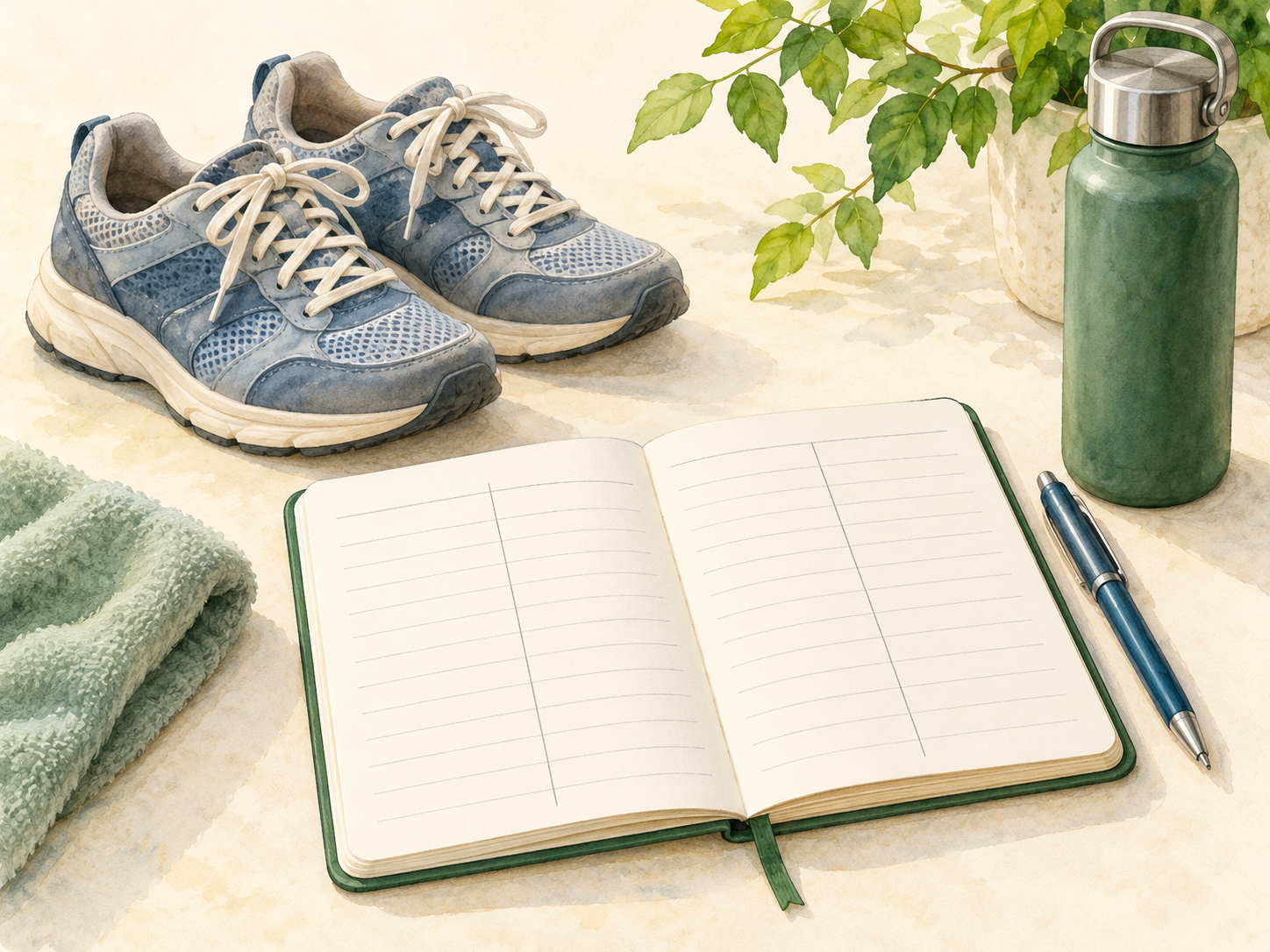
Use a notebook, phone note, or calendar—whichever you are most likely to open. NIDDK’s tips for staying active recommend recording activity type, duration, and how you felt.
Add a brief context note when it helps: a different route, hot weather, poor sleep, or an unusually demanding workday. These notes help you make fairer comparisons. They are observations, not medical diagnoses.
| What to record | A useful example | Why keep it simple? |
|---|---|---|
| Activity and amount | Walked the usual route for 15 minutes | Shows what you actually did |
| Effort | Conversation was comfortable | Adds context beyond time or distance |
| Strength-work details | Same exercise, resistance, and repetitions | Makes later comparisons more meaningful |
| Everyday function | The usual errand felt less tiring | Connects activity with your own goal |
| Context or symptoms | Changed route; knee discomfort appeared | Records information to discuss when needed |
These are examples of log entries, not a workout prescription or a list of targets. Record the activity and amount that are appropriate for you.
1. Count the sessions you completed
A calendar mark is enough to show that you made time for movement. You can also note whether it was walking, strength work, or another activity. This gives you a view of the routine rather than just the biggest workout.
Keep a record of what happened instead of maintaining a perfect streak. A week with fewer sessions may reveal a scheduling problem you can solve. It does not erase the weeks before it.
If remembering is the main barrier, try one of our habit-stacking ideas for healthy aging, such as putting the log beside something you already use after your session.
2. Compare the same activity under similar conditions
Pick a familiar, comfortable activity already in your routine. Compare the same route, exercise variation, or other repeatable task over time. Avoid making the comparison harder just to produce a better number.
For example, two walks are easier to compare if the route and terrain are similar. A slower walk on a steep hill is different from a slower walk on the same flat route. Note the difference before deciding you have gone backward.
For strength work, record the exercise, resistance, and repetitions you completed with your usual controlled technique. Changing equipment or movement makes the numbers less directly comparable. You do not need to test a maximum weight to keep a useful record.
3. Record effort alongside time or distance
Time alone cannot tell the whole story. The CDC’s guide to activity intensity describes the talk test: at moderate intensity, people can generally talk but not sing; at vigorous intensity, speaking more than a few words requires a breathing pause.
Use that as context for aerobic activity, not a diagnostic test or a reason to push into vigorous exercise. Your prescribed limits and any symptoms take priority.
If the same familiar activity feels easier across several comparable sessions, note that pattern. One unusually easy or difficult session is worth recording, but it does not need an immediate explanation.
4. Notice everyday function without staging a test
Think back to the reason you wrote at the top of the page. Is a normal errand less tiring? Are you more willing to take your usual walk? Can you complete a familiar task with fewer pauses? Record your experience in ordinary words.
Keep the task safe and familiar. Do not carry heavier bags, race up stairs, or remove support from a balance activity just to check improvement. If you need a formal strength, balance, or mobility assessment, ask a qualified professional to choose an appropriate one.
A note such as “felt more comfortable on the usual walk” is useful even without a score. It describes what matters to you while leaving room for day-to-day variation.
5. Review the pattern before changing your routine
Choose a regular moment to look back, such as the end of the week. This is an editorial suggestion for making the log manageable, not a medically required testing interval.
- What did I repeat successfully?
- Which comparisons were actually like for like?
- Did discomfort, unusual fatigue, or another symptom recur?
- Is the next useful step a scheduling change, an easier option, or professional advice?
NIDDK advises increasing activity gradually and taking health conditions into account. A better number is not an instruction to add time, speed, and resistance all at once. If your plan came from a clinician or physical therapist, follow their progression guidance.
Keep recovery in the picture, too. Our sleep and recovery guide explains why rest belongs alongside activity in a sustainable routine.
Keep general guidelines separate from your starting point
The CDC describes a general weekly goal for adults of at least 150 minutes of moderate-intensity aerobic activity and muscle strengthening on two days. For adults 65 and older, its guidance also includes balance activity. Some activity is better than none, and individual abilities and conditions matter.
Those guidelines give context; they are not a requirement to meet immediately before your log “counts.” See the CDC’s adult activity guidance and its separate guidance for adults 65 and older.
When tracking should lead to a conversation
If you have an injury or chronic condition, ask your healthcare professional how to monitor activity safely. Stop exercising if you develop chest pain, dizziness, faintness, unusual breathlessness, or pain; seek medical advice rather than using the log to push through symptoms. Severe or persistent symptoms need urgent medical attention.
If tracking makes you anxious or pressures you to ignore symptoms, simplify it or pause it. You can bring a few brief observations to a healthcare visit without collecting daily scores.
Common questions about tracking fitness
Do I need a fitness tracker?
No. Paper or a phone note can record the essentials. A device is optional; use one if its information is helpful and easy for you to interpret.
How soon should I expect improvement?
There is no single timetable that fits everyone. Look for patterns across comparable sessions, and ask your clinician about unexpected or persistent changes.
What if my weight does not change?
This log tracks activity, effort, and function. Weight is a separate measure and does not describe all of those things. You can record a more consistent routine without claiming that the scale tells the same story.
Start with one entry today
After your next appropriate activity, record what you did, how long you did it, and how it felt. Add one sentence about context if needed. Keep that format simple enough to repeat. The best log is one that helps you make thoughtful decisions about the next session.
Health note: This article is general education, not medical clearance, a fitness test, or an individualized exercise prescription. Follow advice from your healthcare professional, especially if you have symptoms, a chronic condition, or are returning after illness, injury, or surgery.
Sources and further reading
- NIDDK: Tips to keep moving
- CDC: How to measure physical activity intensity
- CDC: Adding physical activity as an adult
- CDC: Older adult activity overview
Discover more from Your Whole Body Transformation
Subscribe to get the latest posts sent to your email.