
How to Restart Exercise After 50 Without Overdoing It
If you’re wondering how to restart exercise after 50, begin with what you can comfortably do today. Choose an easy activity, keep the first sessions short, and build gradually. Your old routine can wait while you find a starting point that fits your current life.
Maybe work got busy. Maybe travel interrupted your walks. Or perhaps you’ve been out of the habit long enough that starting again feels awkward. You don’t need to make up for missed workouts. You need a next step you can repeat.

Before you restart exercise after 50, check what has changed
A break caused by a busy schedule is different from a break caused by surgery, illness, injury, or new symptoms. If a health condition or recovery interrupted your routine, ask your clinician or physical therapist which activities and limits apply now.
Healthy adults who return gradually to light activity don’t automatically need medical clearance simply because they’re older. But advice is useful when you’re unsure about a condition, medication, or movement restriction. The National Institute on Aging recommends starting at your current fitness level and working back up gradually after a break.
Before choosing your first session, consider three questions:
- What activity feels manageable right now?
- What stopped the previous routine?
- What would make the next attempt easier to repeat?
Your answers might point to a flat indoor walking route, a shorter session, a different time of day, or professional help choosing suitable exercises.
Choose a small first session
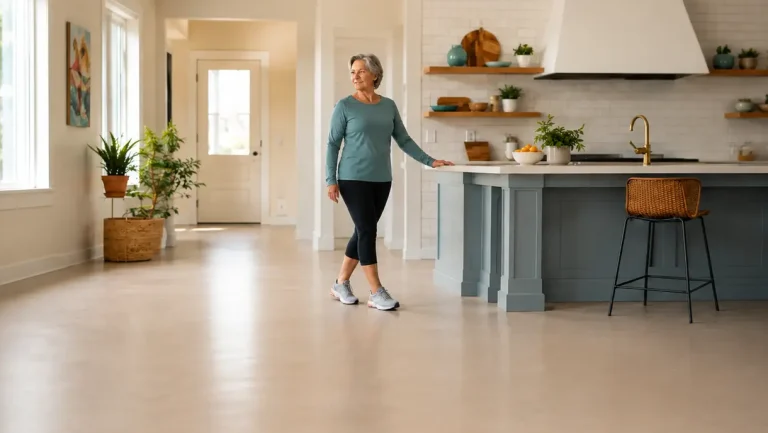
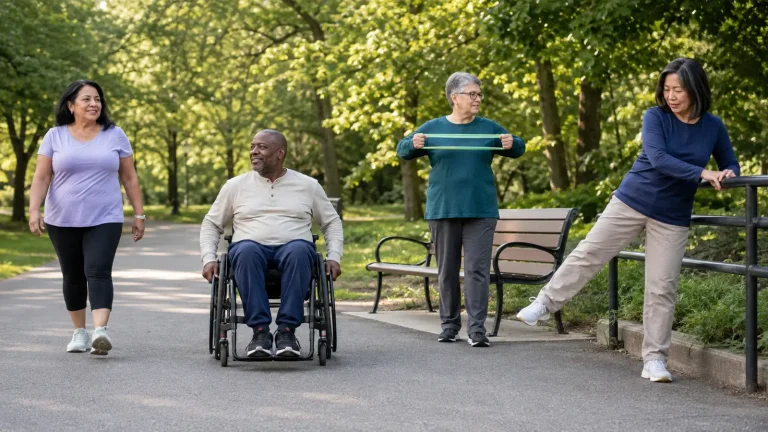
Make your first outing a check-in with your current ability. For someone who can walk comfortably, a few minutes on a familiar, level route may be a useful start. Someone else may need a seated activity or a plan from a rehabilitation professional.
You don’t have to reach a certain distance or step count. Pick an amount that leaves room to assess how you feel during the activity and afterward. A shorter session can also be easier to fit into a workday.
Start and finish gently rather than jumping straight into hard effort. For a walk, that means an easy pace at the beginning and end. NIA recommends warming up and cooling down as part of a gradual return.
Keep the effort comfortable while you rebuild
A fitness watch can provide information, but it isn’t required to notice your effort. Pay attention to breathing and whether you can speak comfortably.
The CDC’s talk test describes moderate activity as an effort where you can talk but not sing. That is a way to judge intensity, not a demand that your first session reach it. An easier pace may be the right place to begin.
Use your current response to guide the next outing. If the session felt harder than expected, repeat a shorter or easier version instead of trying to beat it.
Make room for recovery and warning signs
Don’t use pain as proof that a workout was worthwhile. Stop if an activity brings on sharp pain, dizziness, chest discomfort, or unusual breathlessness. Get medical advice about new or persistent symptoms; seek urgent help for severe symptoms such as chest pain or difficulty breathing.
Notice how you feel later that day and the following morning. If fatigue or discomfort disrupts ordinary tasks, ease back and discuss the problem with a professional when needed. Our guide to sleep and recovery after 50 can help you think about the rest side of your routine.
Use a simple return-to-activity worksheet
Write down a plan you could carry out on a normal week, not just a perfect one. These examples illustrate planning choices; they aren’t a prescribed exercise program.
| Planning question | Example answer |
|---|---|
| What will I do? | A short walk on a level route |
| When will I start? | After breakfast on a day I’m home |
| What’s my easier option? | A shorter route or suitable indoor activity |
| What will I record? | Time spent, effort, and any symptoms |
| When will I review it? | After a few manageable sessions |
Keep the note where you’ll see it. Shoes by the door or a reminder beside your calendar can make the next session easier to remember. For more ideas, see our habit-stacking guide for healthy aging.
Build up without turning every outing into a test
When a session feels manageable and recovery is comfortable, consider a small change. You might walk a little longer, add another suitable day, or choose a slightly more demanding route. Changing one part at a time makes it easier to notice what works.
You can also keep the same routine for a while. Repeating a comfortable session is a valid choice while you rebuild the habit.
Over time, a rounded routine can include strength and balance work as well as aerobic activity. Our beginner exercise guide introduces those options. Choose movements that fit your abilities and any professional advice you’ve received.
If you miss a day, return to the next manageable step
A missed outing doesn’t require a doubled workout. Look at what got in the way and adjust the plan. Perhaps the chosen time competes with work, or the route is inconvenient in bad weather.
Keep a smaller option available, and use it when appropriate. If another long break happens, reassess your starting point rather than picking up automatically where you left off.
Your next step: Choose one suitable activity and write down when you’ll try it. Let the first session help you decide what to repeat, rather than prove how much you can do.
This article provides general education, not a personal exercise prescription. Follow advice for your own medical conditions, recovery, and activity restrictions.
Discover more from Your Whole Body Transformation
Subscribe to get the latest posts sent to your email.